
Today’s media has been built on principles that no longer guarantee attention. Advertising budgets have to perform under pressure and deliver a measurable return. Marketing teams are expected to drive sales, hit KPIs and satisfy stakeholders, often within tight timelines and rising media costs.
At the same time, audiences are becoming more selective. Whether it is television, desktop or mobile, consumers are quick to skip, scroll or ignore anything that feels like an ad. Even a strong creative can struggle to sustain meaningful impact when it is fighting for attention in isolation.
So, does this mean advertising is dead? The challenge is not advertising itself; it is how brands show up. Film partnerships offer a different approach, one that works with audience behaviour rather than against it. I will explore how they can sit alongside your existing activity to create the perfect campaign.
In this blog, I’ll explain how film partnerships can work alongside other advertising efforts to create the perfect campaign.
Why film partnerships?
While traditional and even some forms of digital advertising are on the brink, film partnerships are here to stay. Film partnerships work differently because they tap into cultural moments. They use known characters, familiar worlds and stories that audiences already care about. Instead of interrupting people or adding to the noise, they allow brands to become part of something audiences are already actively engaging with.
A theatrical film release is not just content landing in the market; it is a cultural moment. Studios invest heavily in awareness, media, PR and talent to build anticipation months, and sometimes years, in advance. Trailer drops spark social conversation, and press coverage adds to the momentum. By the time opening weekend arrives, the film’s attention is at one of its highest points.
When a brand partners with a film, it does not start from zero. It benefits from the hype and momentum already being built around the film’s release. Instead of fighting for isolated attention, the brand becomes part of the wider cultural conversation during a window when audiences are already engaged.
Impactful film partnerships
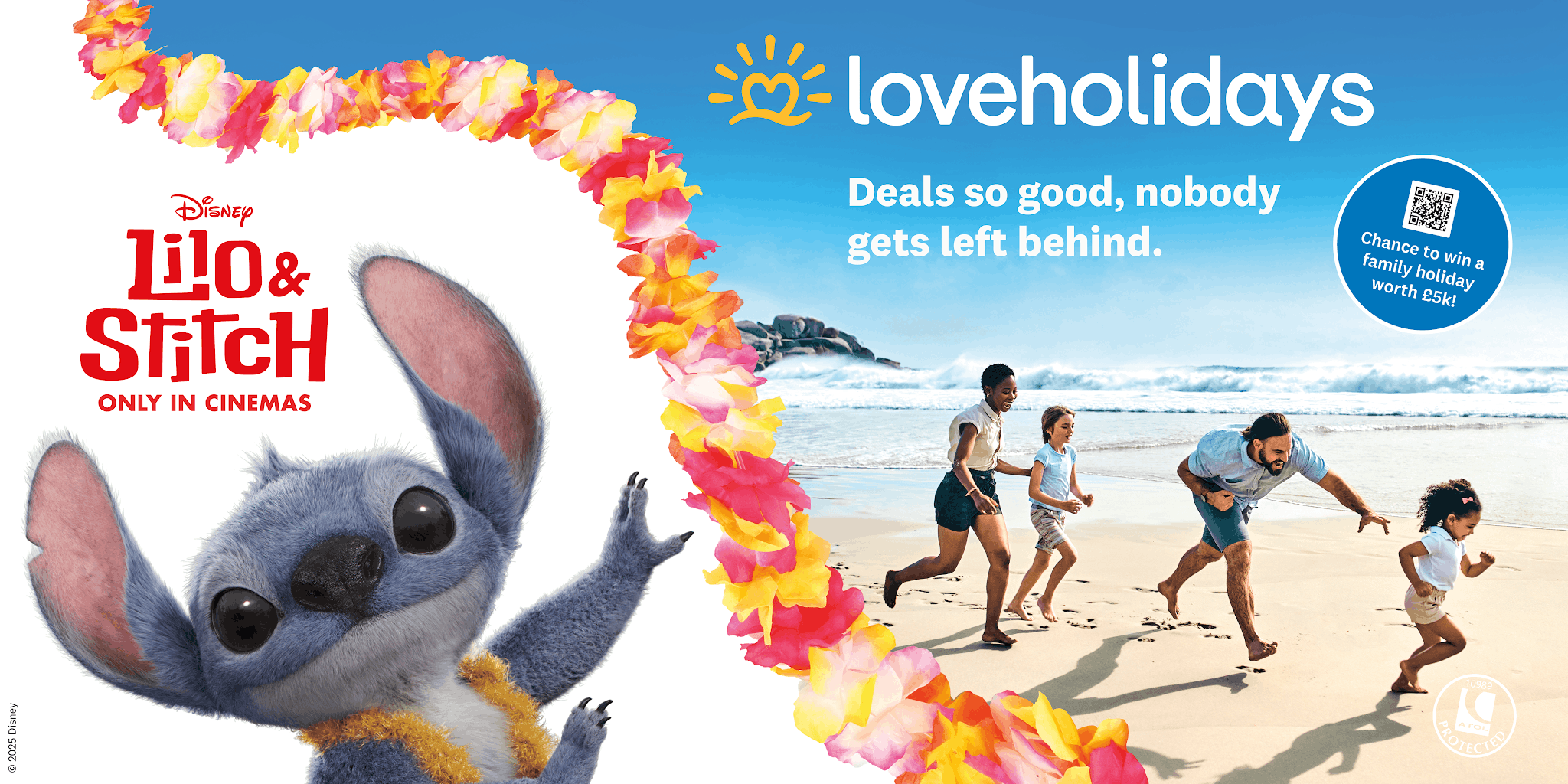
To see how this works in practice, we can look at the collaboration Lime helped broker between loveholidays and the live-action release of Lilo & Stitch.
Lilo & Stitch is built on the concept of Ohana, meaning family, or nobody gets left behind. That made the partnership particularly relevant for loveholidays, a value-led travel brand whose role is helping more families get away. The strategic fit was not simply summer travel meeting a summer film – it was a shared promise around inclusion, togetherness and making memorable escapes feel within reach.
Running in the UK and Germany across the release window, the campaign was designed to drive impact for three clear reasons:
- The emotional alignment was immediate and easy for consumers to understand.
- The mechanic was simple: book a holiday for the chance to win a surf-inspired trip to Portugal.
- The timing was commercially smart, landing at the start of the summer booking window, when families were already in-market, and the film’s release was generating attention.
The channel mix was deliberately designed to reach families at scale during a moment of high national attention. A 30-second co-branded spot ran across digital out-of-home displays and bus supersides, supported by a website takeover, eCRM and early-bird travel offers. To extend the idea beyond paid media, the collaboration also included a press and influencer trip to Hawaii, generating film-inspired travel content tied to the setting and spirit of the story.
Why do film partnerships work so well alongside media?
This campaign was structured to turn entertainment attention into brand relevance and booking consideration. Rather than relying on a generic thematic overlap, it used a culturally visible film moment to bring loveholidays’ value proposition to life in a way that felt emotionally resonant and easy for consumers to act on. It shows how film partnerships can support action when the brand role, timing and mechanics are all clear.
So, how should a brand evaluate whether a film partnership is right for them? Here are five key questions to ask:
Is the audience alignment clear?
- Does the film’s core audience genuinely overlap with your target consumer? If you have to work too hard to justify the fit, it will show in the creative.
Is the link authentic?
- Does the partnership connect naturally to your product or service, or does it feel forced?
Is the mechanic simple?
- If the idea cannot be explained in one sentence, it may be too complicated to land with consumers.
Does it align with a commercial window?
- Is the film release aligned with a peak period for your business, when audiences are already closer to action?
Can you activate across your full channel mix?
- The impact comes from integration across paid, owned, CRM, POS and social. The stronger the channel mix, the more the partnership can feel like a genuine market moment rather than a one-off promotion.
So, is advertising alone dead?
The answer isn’t less advertising. It’s smarter activation. When structured properly, film partnerships do not replace media advertising plans; they strengthen them. They provide cultural relevance, emotional connection and amplified reach at a time when audiences are actively engaged.
These partnerships can be efficient because they leverage awareness that already exists. They can be scalable because they can run across multiple markets and channels. They can be measurable because they align with KPIs and clear commercial windows.
How we can help
At Lime, we work at the intersection of brand ambition and studio storytelling. Our focus is simple: create partnerships that are commercially sound, creatively relevant and built around clear marketing objectives. With deep experience across theatrical releases and long-term IP, we understand how to structure cultural moments into commercially relevant campaigns.
If you are mapping out your 2026 and 2027 marketing calendars and looking for ways to make planned spend work harder, a film partnership may be worth exploring.
Get in touch with our team to start a conversation about the film, streaming and publishing IP we represent, and how it could align with your next campaign.